 TotalSolarPunk.com
Power Planner
How much electricity does each machine pull, and can your batteries carry the load? Build a parts list below to total your network's demand and backup time — then size your solar, wind and generators around it.
Crafting & processing
 Energy Furnace200 W
 Recycler25 W
Farming & animals
 Algae Drone160 W
 Automatic Feeder50 W
 Forester400 W
 Sprinkler40 W

Generation
 Fuel Generator120 W–120 W
 Skyturbine250 W–700 W
 Solarpanel0 W–100 W
 Windmill99 W–300 W
 Wooden Windmill99 W–540 W
Lighting

 Standing Lamp30 W
 Wireless Light25 W
Mining & logistics
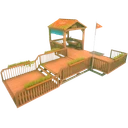 Advanced Dock100 W
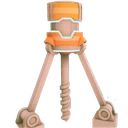 Drill120 W
 Postbox25 W
 Transport Drone300 W
Sensors & logic
- Daylight Sensor1 W
 Weather Station20 W
Storage & distribution
 Battery96,000 stored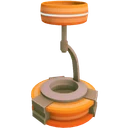
Power balance
Add devices on the left to total up how much power your build draws — and how long your batteries can carry it.
How power works in Solarpunk
Everything on one cable network shares a single pool of electricity. A network has to generate at least as much as its machines draw; when demand outruns supply, batteries cover the gap, and once they're empty the machines stop. Each consumer below pulls a fixed wattage whenever it's running, so the planner's total demand is the floor your generation has to clear.
The catch is that generation isn't fixed. Solar panels produce nothing at night and less in cloud; windmills and the Skyturbine scale with wind intensity, which shifts with the weather. That's why the smart way to plan — as one player put it — is to size your network around the minimum: enough steady generation (or a fuel generator) plus battery capacity to ride out the quiet hours. The backup-time figure shows how long your stored energy covers full draw if generation drops to zero.
Every figure here — demand, battery capacity and generator output — is read straight from the game files. Generator output is shown as a range because it swings with the weather and the day/night cycle; the low end is your safe planning number. For the qualitative side of wiring, switches and sensors, see the power & automation guide.
Generators
Your sources of power. Output is variable by design, so plan around the weaker end of each one's range.
120 W output
Burns fuel for a steady output while it has fuel, independent of weather.
250–700 W output
A higher-tier wind generator — output scales with wind intensity (weather-driven).
0–100 W output
Output rises and falls with the weather and the day/night cycle — panels produce nothing at night.
99–300 W output
Output scales with the current wind intensity, which changes with the weather.
99–540 W output
A larger windmill — roughly double a regular windmill's output at each wind tier.
Power draw, by machine
Every powered device and the watts it pulls while running, hungriest first. Drills, drones and the Forester are the big draws — size your network around them.
| Device | Category | Draw |
|---|---|---|
| Forester | Farming & animals | 400 W |
| Transport Drone | Mining & logistics | 300 W |
| Energy Furnace | Crafting & processing | 200 W |
| Algae Drone | Farming & animals | 160 W |
| Drill | Mining & logistics | 120 W |
| Advanced Dock | Mining & logistics | 100 W |
| Automatic Feeder | Farming & animals | 50 W |
| Water Trough (Powered) | Farming & animals | 50 W |
| Wireless Power Base | Storage & distribution | 50 W |
| Sprinkler | Farming & animals | 40 W |
| Standing Lamp | Lighting | 30 W |
| Recycler | Crafting & processing | 25 W |
| Wireless Light | Lighting | 25 W |
| Postbox | Mining & logistics | 25 W |
| Small wireless lamp | Lighting | 20 W |
| Weather Station | Sensors & logic | 20 W |
| Wireless Sprinkler | Farming & animals | 6 W |
| Daylight Sensor | Sensors & logic | 1 W |
| Battery | Storage & distribution | 96,000 stored |